Outsourcing Software Development to Europe: 2026 Guide
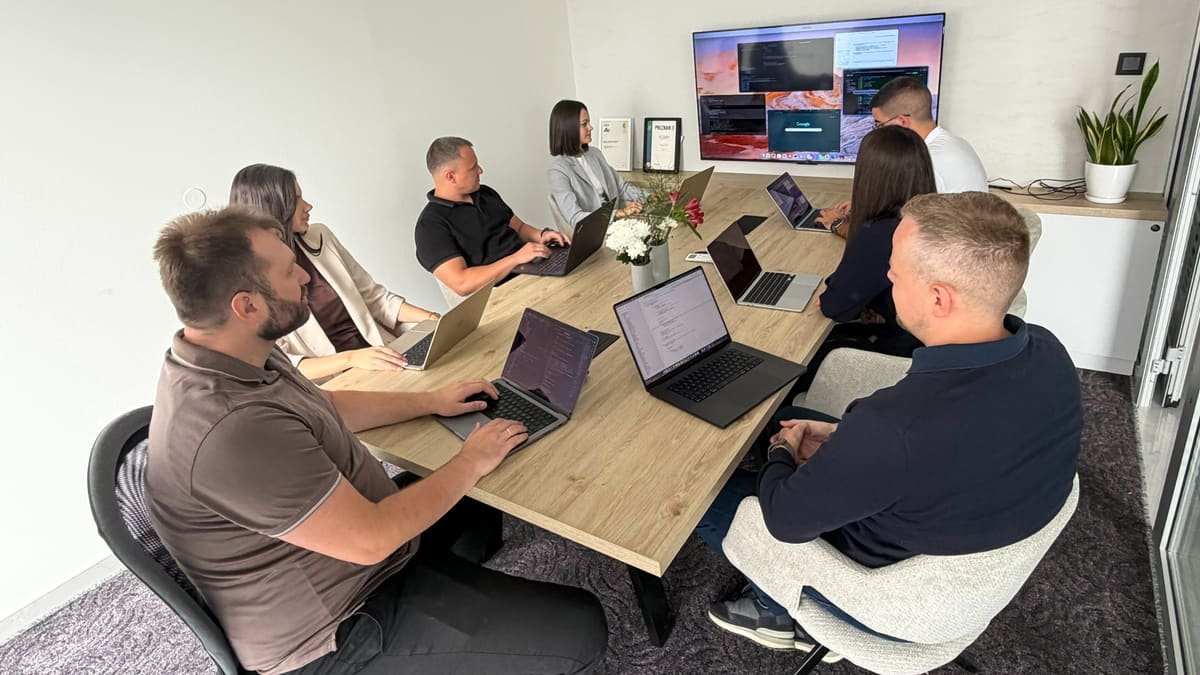
Outsourcing software development to Europe - and to the Balkans in particular, including Bosnia and Herzegovina - gives US and UK companies access to experienced engineers at lower rates than at home, with a nearly full working-day overlap for the UK and about three hours of overlap for the US East Coast. It works well when you protect three things in writing: IP ownership, a lawful data transfer mechanism, and direct access to the engineers doing the work. This guide covers cost, time zones, contracts, GDPR, how to vet a vendor and the red flags to walk away from.
A disclosure up front: TekPiq is one of these vendors. We are an in-house team in East Sarajevo, Bosnia and Herzegovina, founded in 2019. We have tried to write the guide we would want to read as a buyer, including the cases where outsourcing to Europe, or to us, is the wrong call.
TL;DR
Expect lower rates but compare total cost, not hourly price. UK teams get almost a full shared day; US Eastern gets about three hours; US Pacific gets about one, so it needs an async-first setup. Insist on an MSA and SOW with full IP assignment, an NDA before discovery, and standard contractual clauses if any EU or UK personal data is involved. Meet the actual engineers, start with a paid discovery or small pilot, and plan the exit before you sign.
Why do US and UK companies outsource software development to Europe?
- Access to senior engineers who already work together, without a months-long hiring process.
- Cost. Lower rates than US or London agencies, and no permanent headcount for work that may last a year.
- Overlap. Far more shared hours than with teams in South or East Asia, especially for the UK.
- Working culture. English is the default working language in most of the region's tech companies, and engineers are used to Western product teams and written specs.
Where in Europe should you look?
Europe is not one market. Roughly:
- Western Europe (Germany, the Netherlands, Nordics) - strong engineering, but rates close to UK levels.
- Central and Eastern Europe (Poland, Czechia, Romania) - large, mature outsourcing markets with many vendors and mid-range rates.
- The Balkans (Serbia, Bosnia and Herzegovina, Croatia, North Macedonia, Montenegro) - smaller markets, often lower rates, a strong technical university tradition and many engineers who have worked for Western clients for years.
Bosnia and Herzegovina is on Central European Time, is an EU candidate country but not an EU member, and has a smaller vendor market than Poland or Romania - fewer companies to compare, so vet each one properly. EU data protection rules do not apply there directly; more on that below.
How much does outsourcing to Europe cost compared with US and UK teams?
The table below shows rough, typical market ranges for senior engineering capacity. They are not survey results - they vary widely by city, stack, seniority and vendor size, and you will find quotes outside them in both directions. Use them to sense-check proposals, not to budget.
| Option | Typical range (senior level) | What's included |
|---|---|---|
| US in-house hire | Roughly $140-200k+ base salary in major markets, often 1.25-1.4x that fully loaded | One person; you add recruiting, management, tools and benefits |
| US agency or consultancy | Roughly $125-250 per hour | Team, management, replacement cover |
| UK in-house hire (London) | Roughly £65-100k+ base, plus employer National Insurance, pension and overheads | One person; as above |
| UK agency or consultancy | Roughly £60-120 per hour | Team, management, replacement cover |
| Central and Eastern European vendor | Roughly $45-90 per hour | Team, delivery management |
| Balkans vendor | Roughly $35-75 per hour | Team, delivery management |
What the rate comparison leaves out
The saving on total cost is smaller than the rate difference, because some costs stay with you: a product owner, onboarding time, occasional travel and rework if the vendor is weak. A cheap team that needs constant supervision is not cheap. Compare the cost of a delivered, tested outcome.
How project prices are set
Good vendors don't quote a serious project from a short brief. Expect a paid discovery of one to three weeks that ends with a delivery plan, a timeline and a fixed quote for the build. How fixed-price, time-and-materials and dedicated-team engagements differ is covered on our engagement models page.
How much working-hours overlap will you actually get?
Assume the European team works roughly 10:00-18:00 Central European Time (CET in winter, CEST in summer, UTC+1/+2):
| Your location | Shared hours (your time) | Same window in CET | Overlap |
|---|---|---|---|
| UK (GMT/BST) | 09:00-17:00 | 10:00-18:00 | Nearly a full day |
| US Eastern | 09:00-12:00 | 15:00-18:00 | About 3 hours |
| US Central | 08:00-11:00 | 15:00-18:00 | About 2-3 hours |
| US Pacific | 08:00-09:00 | 17:00-18:00 | About 1 hour at most |
Two details people miss. First, the US and Europe change their clocks on different dates, so for a few weeks in March and in late October and early November the gap to the US shrinks by an hour. Second, the UK and the EU change on the same dates, so the one-hour UK gap holds all year.
How to make a small overlap work
- Use the overlap for decisions, not status. Standups, planning and unblocking happen live; everything else is written.
- Default to written updates. A short end-of-day summary from the team means your morning starts with answers, not questions.
- Record demos for people who could not attend.
- For Pacific teams, plan on early-morning calls on your side and an async-first process. If you need more shared time than that, agree a shifted schedule in the contract up front rather than expecting it informally.
How do contracts, IP and NDAs work with a European vendor?
The structure is the same as with a domestic vendor; a few points need more care. (Practical guidance, not legal advice - have your counsel review the contract.)
MSA plus SOW
A master services agreement sets the legal terms once: IP, confidentiality, liability, payment, termination. Each project or phase then gets a statement of work with scope, deliverables, timeline and price. This lets you start small and add work without renegotiating everything.
IP assignment
- Ask for an explicit assignment of all IP to you, on creation or on payment, in addition to any "work made for hire" wording. Under US copyright law, work-for-hire status for commissioned work by an outside company is narrow, so the assignment clause is what does the real work. Under UK law, an assignment of copyright needs to be in writing and signed.
- Check the chain of title: the vendor must have IP assignment in its own contracts with employees and any subcontractors, or it cannot pass you rights it does not hold.
- Require a list of third-party and open-source components with their licences.
- Keep the code in repositories your company owns from day one.
NDA, governing law and exit
Sign an NDA before discovery, so you can share real details early. Agree which country's law governs the contract and where disputes are resolved - ask the vendor directly what they will accept. And write the exit into the MSA: notice periods, handover of code, credentials and documentation, and a reasonable non-solicitation clause in both directions.
For reference, we work on an MSA and SOW with full work-for-hire IP assignment, sign NDAs before any discovery, and you own the code, architecture, infrastructure and documentation we produce. The details are on our security page.
What about GDPR and data transfers?
This depends on whose personal data the team will touch.
- If you are a US company with only US users, GDPR is usually not the main issue in the vendor relationship. What matters is your own obligations - for example a business associate agreement if the team will handle protected health information under HIPAA, PCI DSS scope if card data is involved, and the contract terms US state privacy laws require of service providers.
- If the team will access personal data from the EU, the transfer needs a legal basis. Bosnia and Herzegovina has no EU adequacy decision, so the usual mechanism is the EU standard contractual clauses (SCCs), together with a data processing agreement and a transfer risk assessment.
- If the team will access personal data from the UK, the UK equivalent is the International Data Transfer Agreement (IDTA) or the UK Addendum to the EU SCCs.
The simplest way to reduce risk is to limit access: develop against synthetic or anonymised data, keep production data in your own EU, UK or US hosting, and give the vendor access to production only where it is genuinely needed, with least-privilege accounts. Our approach to SCCs, DPAs and BAAs is described on the security page.
Certifications
Ask vendors which certifications they actually hold, and ask for the certificate or report. A roadmap is not a certificate. For transparency: TekPiq does not currently hold ISO 27001 or SOC 2 - ISO 27001 is in progress and SOC 2 is planned.

How do you vet a software development vendor in Europe?
Use this checklist with any vendor, including us:
- Meet the engineers who will do the work, not only sales. Ask them to explain a past technical decision and what they would do differently.
- Confirm who they are. A registered company, a real office address, named leadership and a history you can check.
- Ask whether the team is in-house. Employees or long-term contractors are very different from freelancers sourced per project.
- Talk to references with a similar project size, ideally clients in your own country.
- Ask about process: code review on every change, automated tests, CI/CD, how they handle a production incident.
- Read the contract first, not last: IP assignment, chain of title, NDA, liability, exit.
- Check the data protection answer: DPA, SCCs or IDTA where needed, and how access to your systems is controlled.
- Ask what they would not take on. A vendor that says yes to everything is not listening.
- Check continuity: what happens when a key engineer leaves or goes on holiday.
- Start small: a paid discovery or a short pilot tells you more than any proposal.
What are the red flags?
- You cannot meet the engineers before signing, or the people change after you sign.
- A fixed price arrives within days, before anyone has asked difficult questions about scope.
- Vague or evasive answers on IP ownership, or IP that transfers only "on final payment" of a long programme.
- They want to work in their own repositories and tools, with you seeing only demos.
- Certifications or big-name clients mentioned in a pitch but not provable.
- No written answer on data transfers when you have EU or UK users.
- No mention of handover, documentation or what happens if you part ways.
- Rates far below the rest of the market. Someone is paying for that difference, usually you, later.
How do you start without taking on much risk?
Do not start with a year-long contract. Start with a paid discovery - typically 1-3 weeks - that produces a delivery plan, timeline and budget you can take to your own stakeholders, or a small pilot on a real piece of your roadmap. Then decide. The phases are laid out on our how we work page.
When is TekPiq a good fit, and when is it not?
We are a good fit if you want a senior, in-house team that works in your tools, can own a product end to end - custom software, web, mobile and AI - and is comfortable with written, async-heavy collaboration. We have specific pages for US companies and UK companies covering overlap, billing and contracts in more detail.
We are probably not the right fit if you need engineers physically on site in the US or UK, a vendor that already holds ISO 27001 or SOC 2 today, round-the-clock live coverage in US Pacific hours, or the lowest hourly rate on the market.
Comparing vendors right now?
A 30-minute call is enough for us to tell you whether we are a fit - and if we are not, what kind of partner would be.
Book a scoping call →Frequently asked questions about outsourcing software development to Europe
How much cheaper is outsourcing software development to Europe?
Hourly rates at established vendors in the Balkans and Central and Eastern Europe are typically a fraction of US or London agency rates, but the saving on total cost is smaller than the rate difference suggests. Management time, onboarding, travel and any rework all count. Compare the cost of a delivered outcome, not the hourly rate, and treat any published market range as a rough guide only.
How many hours of overlap does a US team get with a team in Central European Time?
With a team working roughly 10:00 to 18:00 CET, US Eastern gets about three hours of shared time (9:00 to 12:00 Eastern), US Central about two to three, and US Pacific about one hour at most (8:00 to 9:00 Pacific). Pacific teams rely mainly on written async updates and early-morning calls. UK teams overlap for nearly the whole working day.
Who owns the code when you outsource to a European company?
You should, and the contract must say so. Use an MSA and SOW with an explicit assignment of all intellectual property to you, not just a work-for-hire label, and check that the vendor has assignment agreements with its own employees and contractors so it actually holds the rights it is passing on. Keep the code in repositories your company controls.
Is it GDPR compliant to use a software team in Bosnia and Herzegovina?
It can be. Bosnia and Herzegovina has no EU adequacy decision, so if the team will access personal data from the EU, the transfer needs a mechanism such as the EU standard contractual clauses, alongside a data processing agreement. For UK personal data the equivalent is the UK IDTA or the UK Addendum to the EU SCCs. Limiting the team's access to real personal data reduces the scope further.
What are the biggest red flags when choosing an offshore or nearshore vendor?
Refusing to let you meet the engineers who will actually do the work, vague answers about who owns the IP, resistance to working in your own repositories and tools, a quote that arrives before anyone has asked hard questions about scope, and no clear plan for handover if you part ways.
Is Bosnia and Herzegovina in the EU?
No. Bosnia and Herzegovina is an EU candidate country but not an EU member state, so EU law does not apply there directly. In practice that matters mainly for data protection: transfers of EU or UK personal data to a team there need a transfer mechanism such as standard contractual clauses.
Last updated November 19, 2026. See also: engagement models · security and compliance · for US companies · for UK companies.
Did this help?
Nikola Crnogorac, Founder, TekPiq
Ready to build your next project?
Let's discuss how TekPiq can help you ship software that actually moves the needle.