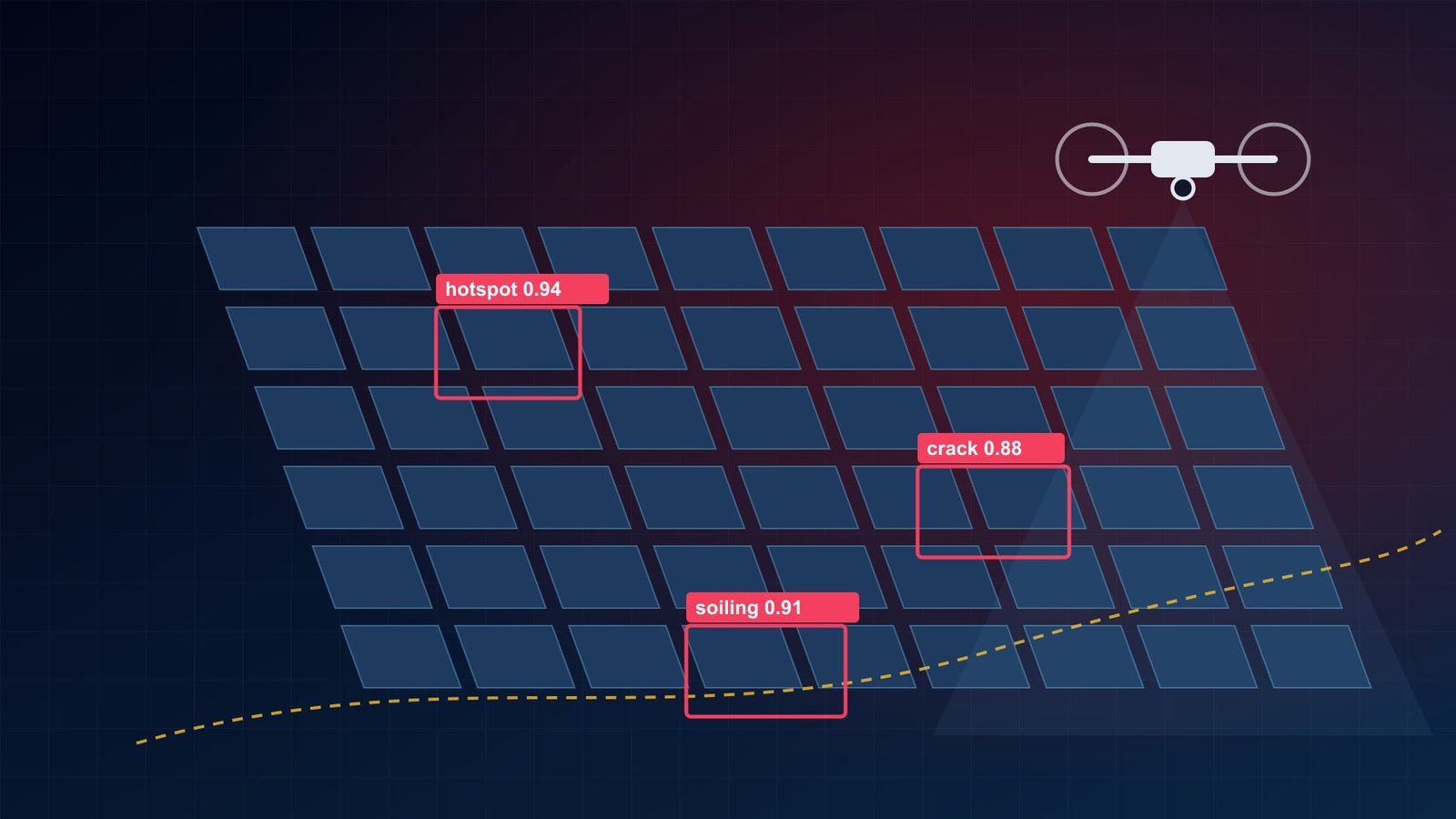
Computer Vision Pipeline for Drone Infrastructure Inspection
ML pipeline that turns drone footage of energy and industrial assets into geotagged, inspector-confirmed defect findings and draft inspection reports.
Last updated 2026-11-19
Client details are confidential under NDA. Figures are approximate and rounded.
- Client
- Infrastructure inspection company
- Industry
- Energy & Industrial Infrastructure
Project Overview
An infrastructure inspection company flies drones over energy and industrial assets and delivers condition reports to asset owners. Its inspectors were reviewing hours of footage per site by hand to find a small number of defects. TekPiq built a computer-vision pipeline that ingests the footage and flight telemetry, detects and segments likely defects, routes them to inspectors for confirmation, and places confirmed findings on a map and in the asset register.
Key Challenges
Large batches of video and high-resolution stills per site, much of it overlapping or showing no defect at all
Defects that are small, rare and visually similar to harmless features such as stains, shadows and reflections
Limited labeled training data at the start, and inspectors with little time to label more
Findings that are only useful if they can be tied to a specific asset and location, not just a frame number
A requirement that inspectors, not the model, make the final call on every reported defect
Deciding which workloads belong on cloud GPUs and which could run closer to the drone
Our Approach
We started by fixing an evaluation set: a held-out collection of labeled frames, reviewed by the client's inspectors, against which every model version is scored for precision and recall per defect class. Ingestion pulls video, stills and flight telemetry (GPS position, altitude, heading) into a single batch per inspection. Frames are sampled according to flight speed and altitude, then near-duplicates are removed so the models see distinct views of each asset. YOLO-family detectors and segmentation networks, trained in PyTorch and exported to ONNX, flag and outline candidate defects. Detections go to a reviewer interface where inspectors confirm, reject or correct them; those decisions feed an active-learning loop that prioritises the most informative frames for the next labeling round. Confirmed findings are geotagged from the telemetry, matched to assets in the register and assembled into a draft report. Production inference runs as cloud GPU batch jobs after each flight; ONNX export keeps an edge deployment path open for cases where results are needed on site.
Technologies Used
Related services
Key Features
Batch ingestion of drone video, still images and flight telemetry per inspection
Frame sampling and near-duplicate removal before inference
Defect detection and segmentation models with per-class confidence thresholds
Reviewer interface where inspectors confirm, reject or correct each detection
Active-learning loop that turns reviewer decisions into new training labels
Geotagging of confirmed findings onto a map and the client's asset register
Draft inspection report generation from confirmed findings
Evaluation set with precision and recall tracked per defect class for every model release
Cloud GPU batch processing, with ONNX export as the path to edge inference
Business Outcomes
Inspectors review flagged frames instead of watching full footage
Every reported defect is confirmed by an inspector before it reaches a client report
Findings arrive geotagged and linked to a specific asset, not just a timestamp in a video
Each model release is compared with the previous one on the same evaluation set, per defect class, before deployment
Reviewer decisions become training data, so the labeled dataset grows as part of normal inspection work
Report drafting starts from structured findings rather than from screenshots and notes
Transformative Impact
The pipeline changes where inspector time goes: from searching footage for defects to judging the candidates the models surface. Because every model release is scored on a fixed evaluation set and every reported finding is confirmed by a person, the client can explain to asset owners how a defect was found and who signed it off.
Related case studies
Residential Access Control System
Access control for residential communities: native iOS & Android apps, custom entry kiosks with video calling, guest passes and a manager web portal.
Read case study
FinTech Mobile Banking Platform
iOS & Android mobile banking with biometric login, instant transfers and AI spending insights - built by TekPiq engineers embedded in a partner team.
Read case study